This summer, our family planted a few vegetables and fruit. It also accidentally let some sunflower seeds fall on the ground and they germinated. Now that the summer is full on and the skies are blue, I decided to play with the beautiful yellows coming from the sunflowers. I think these could do for an excellent and poppy screen background.
Enjoy!
These images are CC-BY-SA. You could download the high resolution ones from my Flickr page.
All of you who read my blog and communicates with me through the openSUSE channels knows that I am passionate about the chameleon image that comes along with openSUSE. It is one of its distinctive images and it is also part of its logo.
In former releases and under former design teams the image of this chameleon was also present. Graphically, this set the striking difference, in my mind, between openSUSE and other distributions. Most distributions rely on simply made logos from SVG. While these other logos and brands are generally well-designed and get across with their point, they tend to lack a reality. By that I mean a real, natural counterpart that can also be included in their marketing image.
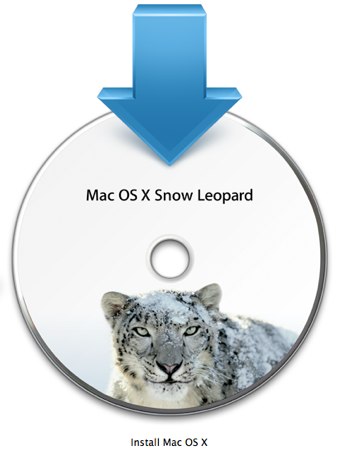
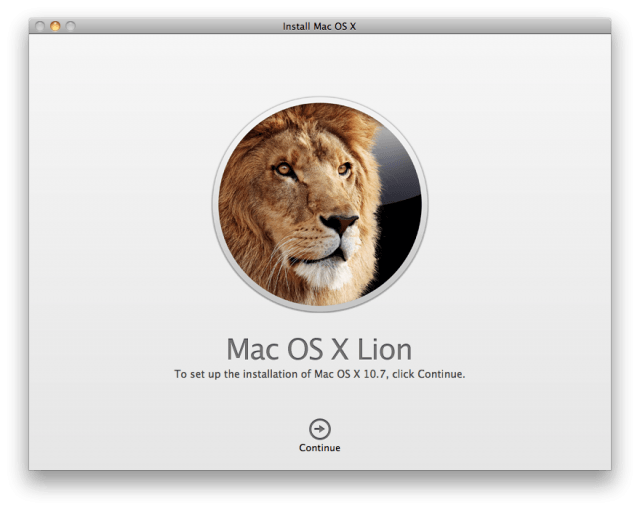
Take for example Apple design. When they decided to brand their OS releases, they chose the names of wild felines such as cheetah, puma, jaguar, panther, tiger, lion, and so on. If you take their marketing strategy over the course of these releases, I believe, they realized that there was much more visual power in using real life images rather than keeping computer generated graphics as their face.
That was up to the release of Leopard. Then there came a change.
Although openSUSE is not Apple and our design team is not quite as sizable, it is important to remember that we too have an image based on a very striking reptile. The chameleon has many variants in its family and it's natural image "rawness" has always made an impact on me. My suggestion is no that we name our releases after different chameleon species, that would make our names run out in just a couple of years given the many releases that we produce. However, if something is to be learned from Apple's and other companies' logo examples such as CORNING's Gorilla Glass
is that natural-based images make a strong impression and makes people endear themselves with a very positive and intuitive way of recognizing a brand. openSUSE has this potential right at home through its chameleon logo. Although for general purposes the chameleon is a vector-based graphic embedded into the official project's logo, there are many other creative ways that you can use this and make an impression.
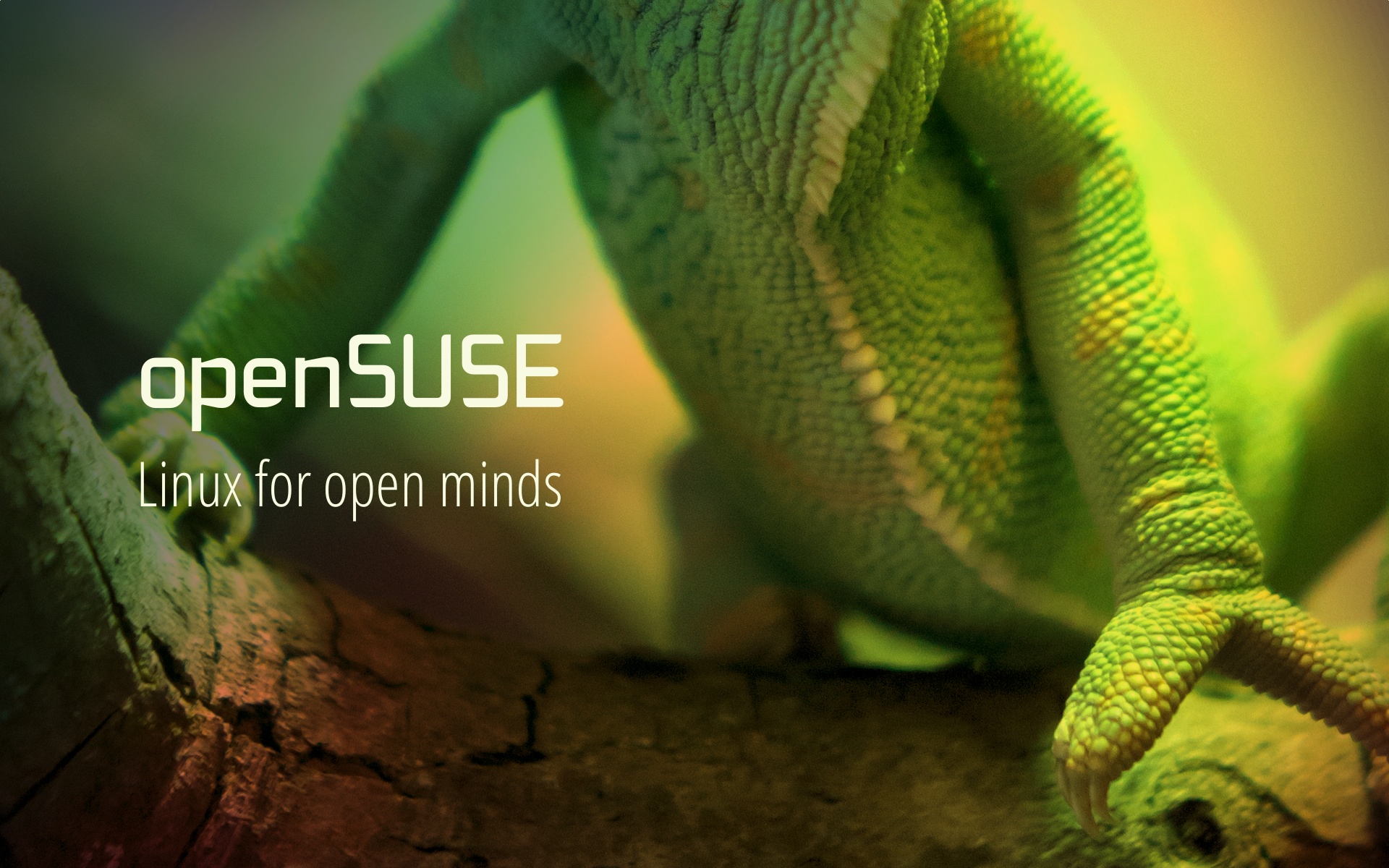
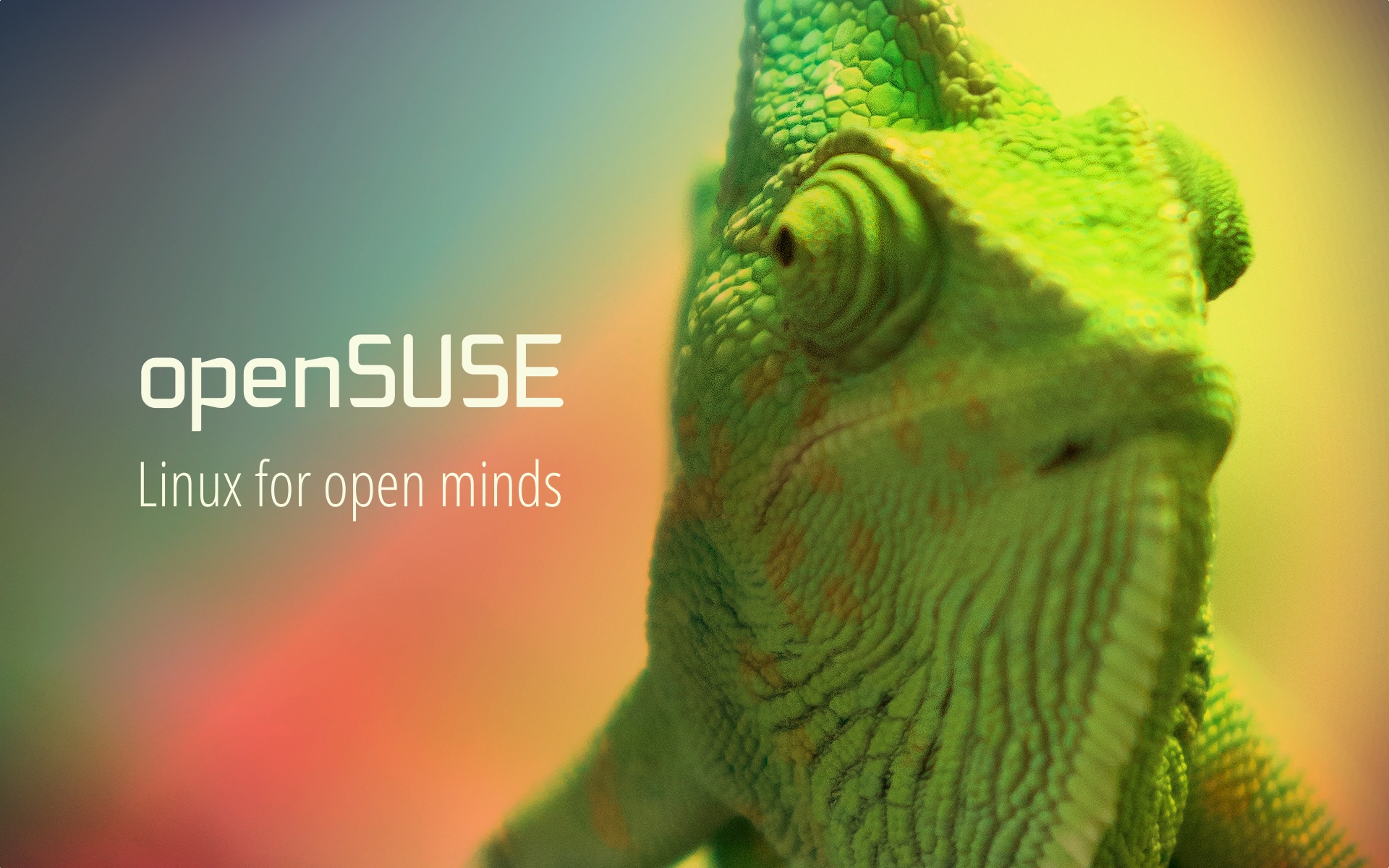
A couple of weeks ago I noticed a request in the mailing list asking to prepare a graphic that would be included in a magazine showcasing the openSUSE conference. I decided to take on the challenge and produce something striking, eye-drawing and relevant. With much thought I decided to find a simple, yet beautiful graphic to promote openSUSE as a brand. This is what came out.
I really enjoyed that design. It brings back that natural beauty of our logo, it promotes our brand, it shows versatility, and it draws attention. I created a few other iterations in case there are more opportunities to bring and integrate our chameleon into the rest of our brand design.
The openSUSE Conference 2013 is ad portas and the media has already caught on to this Open Source event in Thessaloniki, Greece. There was a recent request for having an ad about the openSUSE Conference featured in a German Linux magazine. I quickly jumped to the action looking for ideas on what ways are more effective in delivering an ad about our project.
The first thought was to make something that talked about the conference and the things that will make the conference shine. However, a second thought also came through. The openSUSE Conference is just the result of a much bigger project, the openSUSE Project. If we are to feature an ad about our conference it should be centered on the project and not the conference necessarily.
Why? Because there are many conferences and events every year. It is hard for the general public to know and acknowledge the differences of conferences around the Linux world. However, there is only 1 openSUSE Project. The conference's main event is not the conference itself, it is openSUSE. Therefore, I thought that rather than having the conference-made logos and graphics, we should focus on the main event, openSUSE.
In the end, this is what will go on the magazine. I hope you like it!
Here is a little video I made to help orient your thoughts about the wallpaper submission process. I tried giving you tips and ideas on how to come up with a wallpaper and one specifically made for openSUSE. Please bear in mind that although you may not know all the details about the wallpapers we are looking for, you can still ask for our help for us to give you hints on what to do.
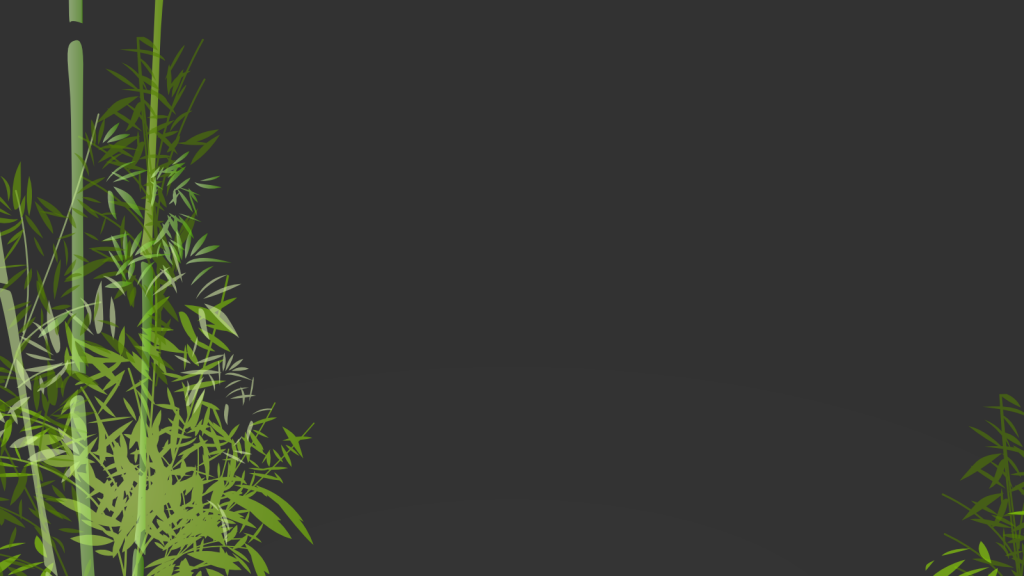
Here is an SVG wallpaper proposal for a default wallpaper on openSUSE
13.1. I tried to go for typical bamboo reeds and a dark background. The
design reminds me a lot of regular plants that one can feature in an
office so the idea here is to link that to the wallpaper. There is also
a very subtle complexity on the graphics. I tried toning down the green
strength so that it does not become busy.
I hope you like it.
Now remember that this submissions will end in about 6 weeks, at which
time "Ilmehtar" will work with the images and start the packaging
process and then the rest of the designs will continue to come up.
It is great seeing that a few of you have made submissions and be sure
that they are taken into account once an overall design for the next
distribution is started based on the chosen wallpaper.
Keep up the good work!
PS: I placed an SVG version of the "aurora" wallpaper I made a few weeks ago and it is on GIT. Obviously the quality is different and so are the colors. If there is a better feel for the svg version, let's work with that one.
Here is another wallpaper that I have been working on recently. I want to make this one part of the supplemental wallpaper package for openSUSE 13.1. I hope it strikes the idea of simplicity and keeping the dark colors introduced on openSUSE 12.2.
The idea here is to show simple crystals with some light effects. Looking at it from far away makes it stand out and I think that it enhances your work being unobtrusive and "blingy" at the same time.
Please remember that you can also turn in your submissions for the next release of openSUSE. Everyone is invited to work on an image that they would like be considered for the wallpaper. Something to remember is that if you are making an image proposal for the "DEFAULT" wallpaper, your work will have to be done in SVG format. If the image proposal you are making is intended for the "SUPPLEMENTAL" wallpaper package, you can do it on raster as well as svg. If done in raster, you will have to prove copies of your work in 4 different resolutions, 2560 × 1440, 2560x1600, 2560x2048 and 2048x1536.
Here is another wallpaper proposal for the 13.1 complimentary wallpaper package. The idea here is to form a nice transparency effect with words that relate to the world of Open Source and openSUSE, or course.
I also added a dark leaf in the center to add some green to the image. However the green leaf can be taken out easily if you think it doesn't work well. For the effects and purposes of keeping a dark background design in the pile of complimentary wallpapers.
Please keep your wallpaper submissions, projects and ideas coming. We are gathering your suggestions so please send them in. If you need help creating a wallpaper and submitting it to our project, given that you may not understand the formatting criteria, please contact me or anyone else at the #opensuse-artwork channel on IRC.
For now, here is the new wallpaper (I followed some tutorials online for this one) :D
The artwork team is now taking submissions for a default wallpaper and a wallpaper collection package for the upcoming openSUSE 13.1. However, you may be wondering, why now? 12.3 was just released!
The reason is that artwork being the face of openSUSE on the desktop needs a long time to mature. It will be a while before the team decides on what will go for defaults and so on, therefore we need to submit our ideas early enough to allow the whole process to evolve and be ready for prime time.
Take into account that submitting images is not a simple task, the format measures need to be met and the image will likely need tweaking, even after it has been chosen as part of the final distribution. Also, the wallpaper has generally marked the main source of inspiration for the rest of the distribution, splash screens, login screens, KDE plasma theme, all depend on the good communication they can have with the wallpaper.
For now, I am leaving this proposal with you and hope that you can also make your submissions soon. Please write and link your image to opensuse-artwork@opensuse.org
This is one of my recent collection of creations for the project. Check it out! Now that many things are about to happen for the community such as the release of openSUSE 12.3, openSUSE Conference in Greece and later on, openSUSE Summit. I hope that some of these images make a change for who participates of the community. I always try to put my best efforts in creating something that reflects the feelings and fun of this community.
Today I worked on a simple design to promote openSUSE 12.3 through web banners. Please take a look and if you want to use them, go ahead! they are free!
I have been working on a plasma theme for some weeks now and I think I am at a point where the plasma theme idea is understood and I would like to get some feedback. Obviously this theme is still considered in early stages, but I think it works well enough for testing.
I hope you like it.
If you would like to help me with it, find me at #opensuse-artwork
As we work on the next release of openSUSE. We would like to invite our community to participate with ideas to guide our design team in choosing artwork for openSUSE 12.3.
Right now, there are some ideas coming through. As designers, it is important to find ideas, words, or concepts that can help guide our thoughts into choosing artwork for 12.3. Please provide us with a max of 3 design "thoughts," for example
1. Simplicity 2. Clarity 3. Light
Choose any 3 of these that can help describe our thought process.
If in doubt of what's appropriate to suggest, and not deviate too much from our current styling guidelines, refer to
PS: In case you have not seen yet, please swing by our flickr page. Our contributors have been hard at work taking pictures and making images that can do for a good wallpaper.
I received some feedback yesterday about the talk I gave at the openSUSE Summit. Unfortunately there is no recording of the talk. I thought that it was being recorded, but it was not. That is why I am posting the full talk here as I wrote it before the presentation. Hopefully it makes sense and gives an idea of what direction we have for welcoming new contributors.
The Rest of Us, Open Source Communities and Non-technical Users
It seems like yesterday when I was finally able to hold a computer.
I was fascinated by the shape of this instrument, the keyboard, the
mouse and screen. In my mind there was simply too much genius into this
machine that I could never be capable to invent something quite like
this. Back then, having an Internet
connection was a dream. Playing with the regular default games like
Solitaire were the most entertaining activities in my day sitting in
front of the computer.
Although
I always believed that computers were going to be part of my future my
life took a different route later on. I became very interested in the arts and I became a sketcher, drawer, and painter. I also enjoy history and learning languages. In fact, I graduated with a history degree from college. I enjoy good design and clever organization.
However,
my old Windows 95, wasn’t what I needed. I wanted to place the arts
into the computer so I embarked in the search for an operating system
that would give me the flexibility of working with my art and interests,
as well as providing good design and powerful tools for the desktop.
I found a page on alternative operating systems and tried some free alternatives of the time; QNX, BeOS, a few others
that failed and eventually I ended up in Linux. I started buying Linux
magazines. They featured burned CDs with a Linux copy of whatever
system was issued then. Dial-up connections took longer to get the ISO
than the magazine shipped to my town, so I chose the magazines over the
Internet. I tried installing Best Linux, Mandrake, Slackware, Suse, PC Linux OS, Ubuntu, Vector Linux, PC-BSD, and a few others.
In spite of the hardware compatibility problems of back then,
eventually Linux became more robust and it was able to work with all of
my hardware was the one I would choose to use.
In this search Suse fit right in. I was able to work with all of its tools and the good ol’ KDE 3.
I loved the KDE interface and the font system. I am sorry if there are
any Gnome lovers in the audience and if this offends you. I loved the
power configurations that you could do on KDE as well as some window
style themes like Domino window style and others. I was able to use
GIMP, Krita, Kaffeine and a few others.
Working
with Linux filled my spirit with great enthusiasm. I realized that
Linux was present in many places already and that the industry would
eventually embrace Linux by porting applications to it. This time was
when I started asking for support on IRC.
I saw the good amount of people who loved Linux and how willing many of
them were to help new users like me. IRC showed me that there are
people in this world still who will donate their genius to the world.
People who will use their free and busy time to code for an open source
project. I decided to give back to the community. But the question was
not about willingness, but about ability? Did I have what was needed to
enter an open source community?
This
is what brings me here today. Stories like mine are countless and yet
it seems so refreshing to share them. Coming from the non-technical
world, working with the community was a challenge. How can you, who only
“uses” a computer, contribute in any meaningful way to the project that
“codes” for computers?
As
I mentioned, I used IRC to connect to some of the members. First asking
some questions and then giving suggestions. But many things that “I”
wanted were not so easy to do, therefore my suggestions went nowhere. A
typical response from the community was, if you want to change it, do it
yourself. While that sounds like a very good response that empowers
individual users to work with open source code, there was little I could
do to help or change what I wanted to contribute with. I tried long and
hard for a while to convince some people to put into code some of my
ideas but with little success. I
decided to reduce the scope of my requests. Little by little I realized
that, instead of asking for changes, I needed to contribute. I could
not make others contribute for me.
I
decided then to create a blog. Just a simple tool to show others about
my ideas on GUI design. The blog still brings some people to it. I am
not the next Facebook but I do feel like my ideas posted there get some
traction. I published ideas on how KDE could look on openSUSE. I focused
my comments particularly on working with KDE 4 and openSUSE. I have
always wanted a radical GUI change for openSUSE, and I still do. I
do not think that my comments got too far. The biggest thing achieved
by my blog was when Aaron Seigo from the KDE project read one of the
entries on my blog and decided to show a quick programing example using a
desktop switcher idea that I wrote about. I didn’t even ask him to do
it and it happened. My blog had reached further that I could ever do it
on IRC. I
realized that I needed to speak the language of those who change the
current in the Linux world, and that was by doing it yourself. But I
needed to focus my contribution. I could not ask anyone to code for me
but I could sway opinions about artwork. Overtime I have participated in
creating some simple artwork for the distribution. Recently, we had a
Novell conference in the town where I live. I was invited to it and met
some of the people I mingled with on IRC.
My
involvement with the openSUSE community could represent the involvement
that many other non-technical contributors go through as they approach
working with open source communities. I happen to be a historian and my
training has made me take a more critical look at the events that lead
up to my participation and the participation of non-technical
contributors to the projects we love. When I mean non-technical, I
mostly mean that I cannot program code.
Being part of an open source project is in its very nature a “public”
event. Just like I had to become “public” with my blog, open source
communities are not only open source but also public source. Meaning
that the very nature of your contributions to an open source project are
made publicly available. It is a meeting where the whole world is
invited. Open source projects are perused thoroughly. Interestingly
enough, in many instances when the solitary confinement of a home
basement gives birth to wonderful open source projects that attract much
attention to programmers who might not expect to be in the forefront of
their project.
Take, for example, Linus Torvalds.
By sending a simple invitation to write code for his newly developed
kernel, Linus became a star ever since. However, Linus remains away from
the spotlight, as much as he can, by avoiding large audiences and
venues that place too much attention on him. Although Linus remains a
fiery commentator, he has never liked the attention that his kernel
brought upon him. This could be true of many other programmers who may
be confronted with the publicity that their open source work generates.
The
project created attracts people of all places and languages. Even
people who who may not understand the complexities of the creation of
such project. People who only see the end result, the non-technical
user. However, the expectations vary from audience to audience as the
open source project is made available. In the case of non-technical
users, they may demand that the functions of the software be perfect.
Many new users assume that the developer is completely in charge of the
open source project when in most cases there may be many contributors to
the project who do not have specific functions. This situation makes
support harder to achieve on the end user’s point of view. Many of them
will feel left out when trying to understand why a certain program does
not run on their Linux computer.
Non-technical
users who want to contribute will also assume many things when coming
in contact with a technical open source community.
Recognition Collaboration Availability
Technical users on the other hand expect Recognition Collaboration Availability
I
categorized these priorities as the same on purpose. However, the
interpretation of these terms is rather different depending of what end
of the spectrum you are.
On
the non-technical collaborator side, recognition means that
non-technical user contributions do have weight and are understood by
the rest of the community members. We may incur into thinking that our
contributions are truly ground-shaking, earth-shaping, world-saviors.
Non technical users will think that their simple ideas put them ahead of
the thinking done by technical users. We have a better answer.
However,
for technical users who can program, recognition starts when others
understand the trouble, time and effort that they took into creating a
piece of software for the world to use. Recognition that their work has
class and it is relevant for others. Overstepping these ideas on both
worlds could lead both type of community members to disagree in their
views about a specific project. While technical users are contempt, for
example, with the powerful features of Yast in openSUSE, some like me
might be unhappy with the GUI design of it. We are speaking about the
same project yet, I could miss the recognition solely based in my
assumptions about Yast not being good-looking and missing the fact that
it is a powerful graphical tool.
Similarly,
technical users may focus on the programming strengths of their
software and miss the graphical elegance that you could integrate into
the program upon suggestions from a non-technical community member.
In
these interactions both type of members may also misunderstand the
collaboration that each of them can integrate into a particular project.
While there is always assumptions about newcomers and over-stayers in
an open source project, there is also a good amount of misunderstanding
about one’s capabilities. If you are a newcomer to the open source
world, being non-technical may brand you as someone who “does not
understand everything” meaning that overall there are many things for
you to learn before entering a project. On the opposite end there is
also assumptions made by non-technical users about the technical users’
collaboration. Non-technical users assume that technical users operate
much like a customer service department. They are part of a project only
to help and fix problems. While some of this hints at the reality, it
is only a partial picture of reality.
Non-technical
users miss the opportunity of collaborating with the tech savvy because
they only intend to drive the development of an app and rarely intend
to do it themselves. Both parties then withdraw and little advancement
and integration is made.
Availability
is another convergence point for open source project members. They
have, as experienced, expectations about the availability of each party.
While technical users always seems to be ready to take on order on IRC,
nontechnical users should join a project only if they are able to put
in the time to work on it, or for it. Neglecting people’s availability
is a major cause of project coding delay. Not understanding the work and
part that each person takes in a project could result in a release that
is half-way done. Often times new users in a project may assume that
people are online 24/7 thinking that emailing will not take long, IRC
chats and comments will be instantaneous, and that adding a line of code
will be done telepathically. In reality, most of us do not work for the
project. The project is a side note, unless you are apart of a
corporation such as Canonical, or Novell, and people have been assigned
to work for open source projects. This does not mean in any way that
people who have been hired for a specific community project have a
little less desire or time to work on it. The point is that the majority
of us contribute with free time or do something on a whim. It happens
to me personally, I get inspired to create artwork at random and
suddenly this could be interpreted as me signing a life of devotion
toward a project, when in reality I would only like to have my work be
used and forget about it later.
This
could also account for a high turnover of contributors to open source
projects. Likely new users, technical and non-technical join a project
with the fire of their desire to contribute with an idea. Suddenly they
are confronted with the three misconceptions outlines before and realize
that open source project completely depend on the voluntary
contributions of its members. I highlight “voluntary” because this word
shows elasticity in time frames, consistency and desire to strive with a
particular project. Then, newcomers slow down, their fire goes out and
eventually they could become a passive or completely inactive
contributor.
Some
may think that the project or the community will be magnetic enough on
its own that people will join the community by its sheer weight, however
this may not be the case all the time. Non-technical users get to feel
the weight of the disparaging differences between how little they know
about the community and what a tough relationship this could be when
trying to make contributions to a community that is far more experienced
in coding and other venues.
Eventually,
a miscommunication between the technical community and the
non-technical contributor could lead into the break between potentially
great contributions and a project that could actually use the
contributions. After all, the life of a community comes from its
members, there is nothing done in a community project until a member
contribution is made. Meaning eventually that not having any use of the
new non-technical contributors makes the project slow down, and miss
opportunities for change and advancement.
Willingness
of new users to learn the ways of the community is also fundamental for
the healthy relationship between the two. New users are to be much like
a sponge when coming into contact with the community. There might be
many instances when there were new members unwilling to learn the ways
of the community. Unwilling to understand and follow established
procedures as well as traditions. In this case it does not matter how
brilliant a new community member might be, there is an element of
personal appreciation in the community, the additions will not be taken
into consideration. The technical community member will disregard your
contributions as important.
Obviously,
these are very general statements from personal observation throughout
my time with the openSUSE community. Can or is this situation any
different? of course. Is the community to do anything to keep or invite
new members? Yes, definitely. There might be some programs, such as the
ambassador program in openSUSE that empowers community members to
participate in the community by adding what they can. But introducing
people to the local community might not be as challenging as introducing
a new community member to a global community. Then there is less to
manage, less faces to see, and eventually, less work to be done. The
goal of this analysis is not to point fingers at community members for
not understanding the non-technical population of their teams, but
rather to understand the tremendous potential that their work can
accomplish. Making ourselves cognizant of the tremendous reach that we
can achieve with our communities by embracing non-technical users could
be the biggest accomplishment of an open source community.
Some
could wonder, how is it possible that a community that advocates the
creation of code is capable of being so welcoming that even the least
technical person can be part of it?
This realization by the rest of the users and open source enthusiasts
can eventually gather a swarm of strong collaborators to a project.
Injecting the needed speed and expertise into a particular project.
Our
aim however is the reach of harmony. While we all may be different
species, we live in the same jungle harmoniously. What does it take for
non-technical users to join the pack of technical users? A simple
reminder of what we can do and the water we are trying to swim on. What
does it take for technical users to understand non-technical users? It
is to understand that we all need water to survive. Whether we like it
or not, we will come to the river for sustenance. Some of us will likely
stay next to the river for the rest of our lives.
Today is the second day that the openSUSE Summit goes on in Orlando, Florida. Attendance is great. There are lots of people here, more than we initially expected, attending and making great assertions to each of the sessions going on. If some of you are in the area and would like to attend, please go into this website and look up the appropriate information.
Yesterday I was able to see some of our team's contributors, Sebatian (tian2992), Eugene, (it-s), and Richard (Ilmehtar). We decided to get together today, at some point, and work on some guidelines for our team. We will be making a few proposals to the team, because of this, later. The idea is to streamline our work. We understand that there are many ways in which the artwork team can fulfill its functions, but in the end, it really needs to comply with release dates more strongly. Right now, we are planning to create steps for our artwork to be done before release, we are also planning to work with people to come up with new design ideas for the distributions and, in the future, change our UI a little more.
The main idea is that we can do a good brainstorming here and then make proposals, mockups, and so on. Eventually, we will present these ideas at the openSUSE Conference and to the rest of the team later at the mailing list. We don't want to post something that is just ideas and half-way done. So stay tuned.
Today is a great day for a couple of our contributors. Richard Brown (Ilmehtar) will be presenting today and also me, Andy (anditosan). My presentation will feature a live stream. If you want to see and listen, please go here.
Here are a couple of web badges made for people who like our project and are going to the Summit in Florida next week. I decided to use a real badge image that I found on this excellent free stock photography website SXC.HU
I decided that it was a good idea to use very bright and contrasted colors. The summit logo works with a deep blue and deep-dark greens. I placed these on a yellow background to give the idea of a sunny place. In case you didn't know, Florida is sunny most of the times.
If you like them, please feel free to download and use.
I just finished creating a new Twitter bacgkground for the release of openSUSE 12.2. Join us in this promoting effort by placing this image as the background on your Twitter account.
Here is a quick way to promote openSUSE's release at your own website. This is taken from Yaloki's website.
If you have a website/blog, here is the HTML markup to add in order to include the openSUSE release countdown image: The markup above will add a 256x256 pixel image. If you prefer to have the smaller (130x130) one: And in case you prefer the huge one (400x400px) for maximum visibility: Enjoy :D
Once again our team meets for another release of our distribution of choice, openSUSE 12.2. As part of the artwork team, we focused on this release on going back to the strong greens that identify our distribution. We also added a few wallpapers with images of chameleons so that our mascot would be part of our distribution again.
On the subject of chameleons, I have been pondering recently about the variety of designs that can come from this reptile. It is one that changes colors to adapt to its environment, it also has a tongue that extends sometimes longer than its own body and it lives in trees eating insects. I own a chameleon myself and as I have lived with it, I have realized that it is a great design inspiration. Recently also, I found these images from Igor Siwanowics
These images are beautiful. Igor really knows how to get people closer to these chameleons, which are so small. I think they go along very well with our mascot and as part of a collection of wallpapers for openSUSE. That is why I contacted Igor to see if he would donate a chameleon image to our project. We are still working on something for us, but I am positive that he will be happy to contribute to our project. Stay tuned.
12.2 is now ad portas and we are working hard to finish working with the marketing materials.
openSUSE Summit 2012 is also coming up soon. We are all very excited in the US to have a mini openSUSE conference. I have now confirmed my participation to the gathering and also my presentation on openSUSE's contributions. I intend to gather more possible contributors to our artwork team. We are still lacking good coders that can make some of our ideas transpire from within the distribution. We want to have a stronger influence than simply selecting wallpapers. Stronger branding and stronger image for our users and new users. We have asked some of our community members to share their ideas about social apps on the desktop and also how they use their desktop environment. If you know someone who can code C++, please let us know. We will be eager to talk to him/her.